All Categories
Featured
Comparing Various Impaired Risk Life Coverage Options
Advanced Impaired Risk Life Insurance Protection Strategies


2026 Policies for Applicants
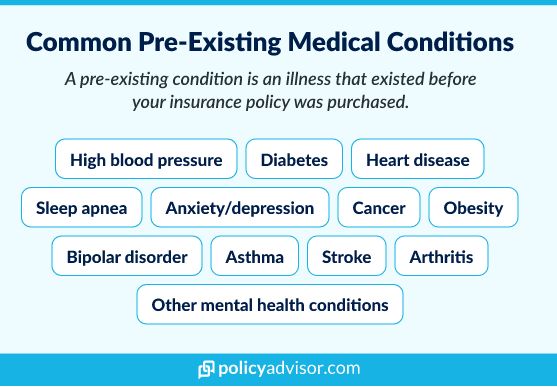
Medical conditions that are steady and well-managed occupy a basically different underwriting position than conditions that are actively unsteady, just recently made complex, or improperly treated even when the medical diagnosis name is the same. Conditions that consistently create underwriting friction across most carriers consist of current or active cancer in treatment (where most carriers hold off until treatment is total and remission is established for a specified period), active symptomatic cardiac arrest or really recent significant heart occasions, advanced kidney disease with considerably lowered function, extreme COPD with recorded oxygen dependence, and intricate autoimmune conditions with active organ participation.
Our resource on life insurance for autoimmune illness covers the general autoimmune underwriting framework, which uses across the category with condition-specific variations. Blood clotting disorders and deep vein thrombosis history present particular underwriting concerns around recurrence danger and anticoagulant therapy; our resource on life insurance for embolism history covers this discussion. Modern underwriting utilizes electronic prescription databases that supply a history of filled prescriptions, generally covering numerous years, that the carrier questions as part of the underwriting review. When the application disclosure is inconsistent with what that database shows, the carrier translates the disparity as a problem either a significant medical problem that was omitted from disclosure, or, in the worst analysis, intentional misstatement.
Each of these creates an inconsistency that slows underwriting, activates extra queries, and in some cases produces a conservative outcome that would not have accompanied complete preliminary disclosure. The solution is precise and complete disclosure at the application stage not leaving out medications since they seem small or due to the fact that the candidate has stabilized them as part of day-to-day life.
Goldencare vs Harmony SoCalContext needs to be supplied where pertinent a broker cover letter that explains a medication's sign, the period of use, and the stability of the underlying condition converts a prospective warning into a recorded, contextualized disclosure that underwriters examine appropriately rather than conservatively. Our resource on what is MIB in insurance covers how underwriting databases produce cross-referencing that makes total disclosure not simply ethical however practically essential for the very best outcome.
Integrating Insurance with Special Needs Trust Planning
Stable, cured anxiety with consistent treatment and medication management and no hospitalizations normally produces basic to mildly rated outcomes at many carriers. The elements that develop major underwriting friction are current hospitalizations, recent suicide attempts (which produce posts ponement or declines at the majority of providers for specified periods), extreme instability, multiple medication changes within a short window, and patterns suggesting continuous practical problems.
Goldencare vs Harmony SoCalThe provider that examines mental health history most favorably is often one with specific underwriting experience in behavioral health threat not the provider with the best basic market premium. Compound usage history follows the exact same pattern reasoning.
Life insurance coverage underwriting examines non-medical factors that impact mortality danger with the very same principle that uses to medical aspects: severity, pattern, and carrier hunger figure out the outcome. Hazardous professions commercial diving, offshore oil and gas work, mining, explosive handling create underwriting friction because they represent elevated accident death risk that standard premium designs might not sufficiently rate.
High-risk avocations personal aviation, motorsports, skydiving, rock climbing at competitive levels are examined likewise: the extent and frequency of participation, the training and certification level of the participant, and the carrier's present cravings for the specific activity determine the outcome. Some carriers have well-developed flat additional schedules for particular avocations that produce insurable protection with specified premium additions; others decline the thing totally.
Industries and occupational classifications that bring reputational danger or legal direct exposure, consisting of adult home entertainment and certain financial services roles, need providers with explicit underwriting frameworks for those categories; our resource on life insurance coverage for adult home entertainment employees covers this less commonly talked about underwriting category. Our resource on life insurance for foreign nationals covers the residency and paperwork underwriting framework for candidates without U.S.Using to a carrier without such a framework produces either a decline or a demand for paperwork that the provider's underwriting team is not equipped to assess. Our resource on life insurance coverage for H1B visa holders covers the paperwork and carrier selection requirements for the most common professional work visa category. An official decrease at one provider creates an MIB notation that subsequent carriers can see when they query the database as part of their underwriting review. This notation does not avoid coverage at subsequent carriers it develops an extra question that must be dealt with. When an application discloses a previous decrease (as many applications require), the brand-new carrier's underwriter will examine not simply the existing application but the context of the previous decrease: why did the previous carrier decrease? Has anything changed since the prior decline that resolves the hidden concern? Is the current provider being asked to handle a danger that an advanced peer provider currently assessed and rejected? This is why the tactical action to a previous decline is not to reapply arbitrarily and hope for a various result it is to identify the particular factor for the prior decrease (typically divulged in the provider's negative action notification), then identify whether that factor is addressable through better documentation, enhanced stability, a various item type, or a provider with different standards for the specific issue.

Latest Posts

How to Secure High Risk Life Insurance

Comparing Various Impaired Risk Life Coverage Options
Advanced Impaired Risk Life Insurance Protection Strategies